Early in my career I helped launch and contribute to New Orleans' regional tech blog Silicon Bayou News. Below is an original post from that time.
Here's an interesting case study for all you entrepreneurs out there: a charismatic CEO leads his company to launch multiple revolutionary tech products that captivate the press, attract a legion of loyal customers, and earn ridiculous margins. If you're thinking Steve Jobs you're a little late. The brand was Polaroid and the man was Edwin Land. And long before Instagram or Apple, his team gave the world beautiful products and photos. Steve Jobs himself called Land a national treasure and sought his advice during the early years of Apple.
A new book on Polaroid by Christopher Bonanos was getting attention in Wired magazine and Forbes. The title is Instant: The Story of Polaroid and Joshua Raley caught up with him recently to discuss it.
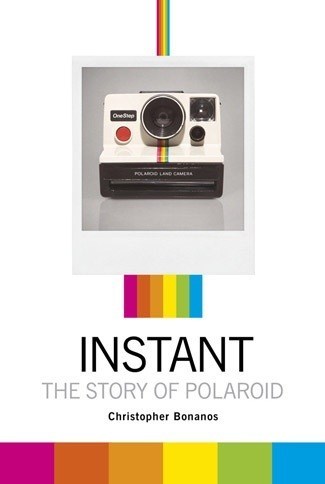
Joshua: There are older books on Land and Polaroid. What made you want to write this one right now?
Christopher: I read them all, of course, and there seemed to be room for one more. The existing books deal only with the rise of Polaroid and not its descent and collapse, and needless to say that's become a whole lot of the story. There's also the definitive biography of Edwin Land by Victor McElheny, which is an immense scholarly achievement but is more about the man than the company, and it's very heavy on the science for a general-interest reader. None of those books includes any color photography, which is another way to tell the story. I mean, it's a book largely about taking pictures. You've gotta see them!
Joshua: You describe how Land was quick to hire young talent, and for the era particularly open to hiring women engineers and scientists. Did these progressive moves help Polaroid achieve such an emotional connection between its products and fans?
Christopher: Most of all, I think, it was Land's way of finding smart people in places nobody else was looking. He'd hire new graduates out of the art-history department at Smith and send them off for some extra chemistry classes, to make his own scientists. He also just liked women, in a way many men of his generation did not. Creating your own experts from scratch and taking them seriously makes them very loyal. Some of those women stayed by his side for 40 years.
Joshua: What would it have taken for Polaroid to transition to a profitable, innovative role within the digital photography industry of the 90s? Were the economics all wrong for an older company to enter?
Christopher: It wasn't so much the age of the company as it was the particular assets Polaroid had. By the late eighties, the company was invested in manufacturing film in giant quantities, and its executives couldn't see a Polaroid Corporation that worked without that. The cameras never brought in nearly as much money as the film did, so the razor/blade model only worked when you sold a bunch of film. And once the film went away, Polaroid's people just had no next great idea. I do think that inkjet printers would've been the business to get into, because it's the same kind of model: cheap printer, expensive ink cartridge. They could've been Hewlett-Packard in the 1990s.
Joshua: In your book you describe Polaroid's hesitation to enter the digital camera business, despite having the overall technology in the 1980s. You included a great quote from a Polaroid employee who said, "The engineering department refused to accept the bad taste of the consumer." Could you tell me more about that dichotomy?
Christopher: In the 1980s, the inkjet-printer business was being seriously considered within Polaroid, as was the digital-camera future. They looked at the ink-droplet size on a piece of paper, figured out how tiny they could get it, compared it with the grain on a piece of analog film, and said, in effect, "we can't make this as great as what we're doing. So we won't do it." They wouldn't accept that we look at newspaper photos every day that are grainy, and accept them for what they are. Corporate pride got in the way, a little bit.
Land, as far as I can tell, relied entirely on his sense of human nature. "Delight" is exactly what Polaroid technology did to people, and I think he just viscerally understood how to push that little "aaaaah" pleasure button in the brain. Same way Dieter Rams or Jony Ive does, in the more limited realm of pure industrial design. You know when you pick up a Braun alarm clock or an iPhone, and the corners feel exactly right in your hand? And then you pick up the cheapo remote control that comes with your cable box, and it just doesn't. Instead of being a joy to hold, it's annoying.
Joshua: Steve Jobs has been quoted as saying that it takes more than just engineering — it takes the marriage of technology with the liberal arts to achieve great products, a very Edwin Land-esque thing to say. Aside from Apple, are there any companies today that you feel actually get that marriage right?
Christopher: I think a lot of what's being done now in that realm is almost invisible, like UPS's logistics systems or Amazon's. They're just insanely complex, and they actually work most of the time. Amazon is looking to start same-day delivery in a lot of places, which seems impossible, and apparently they've mostly got it figured out. That's not product design, certainly, but it's a hell of a technological achievement, and using technology to change your life was Land's ultimate goal.
Joshua: Do any cameras and products on the market today impress you in the same way the Polaroid brand did?
Christopher: There are really handsome new retro-styled products, but they are not giant technological leaps. What I'm really interested in is the Lytro, and how on earth it works. That, I must say, is the kind of leap Polaroid people were interested in, and I am very curious to try one out.
Joshua: You talk about how Land was good at generating press and public interest. Where did the young Edwin Land learn his media skills?
Christopher: He was extremely confident in his science, and that helped him through. But the showmanship developed later. He was kind of shy and introverted when young. Even later on, he could be odd unless he was turning on the charm. Some interviewers recall that he kind of pre-interviewed them, to see if they were the kind of people he could communicate with.
Joshua: Do you see the future of physical film changing much? Will the general public ever return to physical photos?
Christopher: Not the mass market, surely. Your cell phone is unbeatable for that. But for the niches of fine-arts and experimental photography and the simple fun of shooting analog, it'll be around for a long time.
Joshua: Your favorite Polaroid camera and film?
Christopher: I've never shot Type 55 p/n film, but I'm really amazed at the beauty people were able to get out of it. For my own use, the ASA 3000 black-and-white films are a technological tour de force, and exceptionally beautiful. They allow you to shoot like almost nothing else. Indoors, minimal light, decent exposure times, big tonal range. I shot some today, in fact.
Thanks again to Christopher for the interview and a great book.